
Plus500 Trading & Investing
Plus500 TradingFinance
4.4677.00 Reviews
- Version
- 26.8.0
- Installs
- 500.00K
- Age Rating
- Everyone
Screenshots

Our Review of Plus500 Trading & Investing
 Analysis by Appyee
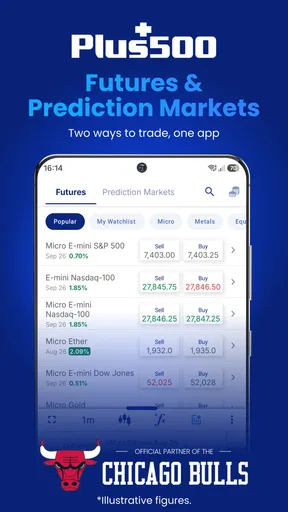
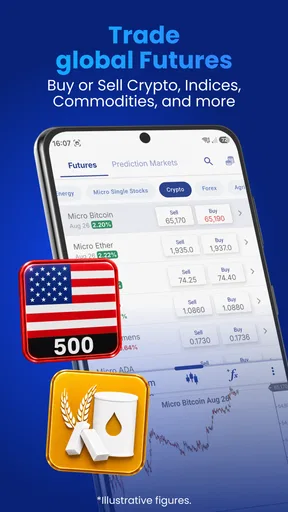
Plus500 Trading & Investing is a finance app I would approach as a focused trading tool rather than a complete personal-finance companion. I found its appeal in the direct way it puts market instruments in front of you, including futures linked to Bitcoin and Ethereum, foreign exchange, the S&P 500, the Nasdaq, and other markets. That concentration makes it easier to think about a trade, but it also means the app demands more discipline than a savings or budgeting application.
My overall view is straightforward: this is better suited to an informed trader who wants a mobile market interface than to someone looking for a simple way to build long-term wealth. The app is free to install, is published by Plus500 Trading, and carries an Everyone age rating. Those details make it accessible, but accessibility should not be confused with simplicity. Trading futures and other market instruments can expose a beginner to losses quickly, so the most important part of using this app is knowing what you are doing before placing an order.
What using Plus500 feels like in practice
I found the app most useful when I treated it as a place to inspect a specific market question, not as a prompt to trade whenever prices moved. In this section, I focus on how a deliberate routine can make its mobile format more helpful and less distracting. That distinction matters even more when deciding whether this trading-first approach fits better than a slower, simpler financial tool.
A concentrated workspace for active market decisions
The first thing I noticed is that the experience is organized around instruments and market movements, not around household money management. I would open it when I wanted to inspect a particular market, compare possible opportunities, or keep an eye on an existing trading idea. That is a different mindset from opening a banking app to check a balance or using an investment app mainly to make scheduled contributions.
The range named in the app’s presentation gives it a broad reach within trading. Bitcoin and Ethereum futures will interest users who follow digital-asset markets, while foreign exchange and major US indexes appeal to people who prefer currency or wider market exposure. The mixture is useful because it lets a trader move between different types of markets from one place, but it can also encourage unnecessary activity. Having many instruments available does not mean every instrument deserves a position.
I think the app works best when I begin with a clear question. For example, I might ask whether a market has moved enough to justify further research, or whether an existing position still fits my original plan. That is much safer than scrolling through instruments until something looks exciting. The interface can make market access feel immediate, so a written plan, a defined risk limit, and patience matter more than the number of markets on screen.
Why the mobile format is useful
A phone-based trading workspace is convenient when I need to review a position away from a desktop. I can use short moments during the day to check whether a market has changed materially instead of waiting until I am back at a computer. This is particularly practical for someone who already has a strategy and wants a portable way to monitor it.
That convenience has a less comfortable side. A phone is also where distractions, rushed decisions, and emotional reactions are most likely to happen. A sudden price move can make a user feel compelled to act immediately, even when the best decision is to do nothing. I would therefore treat the app as a monitoring and execution tool, not as a source of entertainment or a replacement for proper preparation.
One useful habit is to separate research from action. I would review the market first, write down the reason for considering a trade, and only then decide whether the order still makes sense. This simple pause helps prevent the common mistake of confusing movement with opportunity. It is one of the less obvious advantages of a specialized app: because the purpose is clear, it can support a repeatable routine if the user supplies the discipline.
The app’s strongest evidence: market variety with a clear purpose
The strongest case for Plus500 Trading & Investing is its combination of recognizable markets and a trading-first design. A person interested in several market categories does not need to jump between a cryptocurrency service, a foreign-exchange platform, and a separate index-trading tool simply to follow a watchlist. Bringing those interests together can make observation more organized.
That does not make all instruments interchangeable. Bitcoin and Ethereum futures can behave very differently from a major stock index or a currency pair. Their volatility, trading hours, and reaction to news may vary considerably. A trader who understands one area should not assume the same approach transfers perfectly to another. I would use the app’s breadth as a way to compare opportunities, not as an invitation to trade every category at once.
The app has also attracted a meaningful user base. It has passed half a million installs, holds a 4.4 average from around 3.8 thousand ratings, and has roughly 677 written reviews. I read those figures as evidence that the product is established enough to have a visible audience, while still reminding myself that popularity cannot prove whether it matches my own risk tolerance or trading style.
Where the experience needs caution
The main weakness is not a missing button or an awkward screen; it is the gap between a smooth mobile entry point and the complexity of the products available through it. Futures trading is not the same as buying and holding an ordinary share. A user needs to understand leverage, contract behavior, margin requirements, expiry-related mechanics where relevant, and the possibility that a small market move can have a large effect on an account.
That learning burden is easy to underestimate when the app itself is free. The absence of an installation charge does not remove trading costs or financial risk. Before using real money, I would make sure I understand the instrument, the order I am placing, the amount at risk, and the conditions that could close or reduce a position. If those concepts are unfamiliar, this is not the place to learn through trial and error.
Another limitation is psychological. A mobile app makes it very easy to check prices repeatedly. Frequent checking can lead to frequent interference, especially when a position moves against me. I would rather define the conditions for reviewing a trade in advance than let every notification or price fluctuation dictate my behavior. The app can support a strategy, but it cannot supply one.
Three practical habits that make a difference
First, I would build a small watchlist around a specific theme instead of collecting every available market. A list containing one index, one currency market, and one digital-asset instrument is easier to study than a crowded screen. The goal is to recognize meaningful changes, not to create the illusion of control through constant monitoring.
Second, I would record the reason for each trade before opening it. The note does not need to be elaborate. It could state the market view, the invalidation point, and the maximum acceptable loss. Reviewing that note later helps distinguish a planned decision from an emotional reaction. This workflow is especially valuable on a phone, where a quick tap can otherwise replace proper analysis.
Third, I would use the app to compare behavior across markets before committing money. Watching how an index, a currency pair, and a digital-asset future respond to the same broad news can teach more than jumping straight into a position. It also reveals an important trade-off: variety is useful for research, but it increases the number of risks I must understand.
Who should use it, and who should skip it
I see Plus500 Trading & Investing as a reasonable fit for an active trader who already knows why futures or related instruments belong in their plan. It may also suit someone who wants a portable way to follow several market types and prefers a dedicated trading environment over a general banking application. The free download lowers the barrier to trying the interface, and the current version, 26.8.0, supports relatively recent Android devices running at least Android 8.0.
I would not recommend it as a first financial app for someone whose main goal is budgeting, emergency savings, retirement contributions, or uncomplicated long-term investing. A conventional savings account is more appropriate for cash reserves, while a long-term investment service may be a better match for someone who wants diversified contributions with minimal day-to-day decisions. Those alternatives solve different problems, and choosing a trading app for a savings objective can create avoidable risk.
Beginners who are curious about markets should not feel pressured to place a trade simply because the app makes access convenient. A better starting point is to learn how the selected instrument works, follow it without money at risk, and decide whether the level of volatility is genuinely tolerable. If the user cannot explain the trade in plain language, I would skip the order and continue learning.
How it compares with familiar alternatives
Compared with a standard bank app, Plus500 Trading & Investing is more specialized and more market-oriented. A bank application is usually built around balances, transfers, cards, and everyday finances; this app is aimed at observing and trading financial instruments. That specialization is its advantage for an active user, but it also means it is not a substitute for ordinary money management.
Compared with a basic long-term investment platform, the difference is even sharper. A long-term platform generally encourages a slower routine, such as regular contributions and limited portfolio changes. Plus500’s emphasis on futures, currencies, indexes, and digital-asset markets is more suitable for someone making active decisions. I would choose the latter only when I had a clear reason to trade rather than simply wanting exposure to markets.
Compared with a single-purpose cryptocurrency app, its broader selection is appealing. I can look beyond digital assets and consider foreign exchange or major indexes in the same trading context. The trade-off is that broader access requires broader knowledge. A user who only understands cryptocurrency may find the additional markets distracting rather than helpful, while an experienced trader may value the ability to keep several areas under observation.
Questions I would settle before installing
The first question is whether the app costs anything to download. It is free to install, which makes exploring the interface easier, but I would still distinguish that from the costs and risks connected with actual trading. I would read the relevant trading terms carefully before depositing funds or opening a position.
The second question is whether it is appropriate for a complete beginner. My answer is no, not as a shortcut. The app may be easy to access, but futures and leveraged market exposure require knowledge that a download cannot provide. A beginner can use it for observation and education, but should not treat the first live trade as a lesson.
The third question is whether a phone is enough for serious analysis. For monitoring and straightforward decisions, it can be practical. For detailed research, comparing many scenarios, or maintaining a complex strategy, I would still prefer a larger screen and a separate written process. The mobile format is convenient, but convenience should not determine the quality of analysis.
The fourth question is whether the app is suitable for long-term investing. I would choose a different kind of service for that purpose. The presence of major indexes does not automatically turn a trading-focused product into a passive investment solution. The right choice depends on whether I want active market decisions or a slower, contribution-based approach.
My final assessment
After looking at what it offers and how I would use it, I think Plus500 Trading & Investing succeeds when treated as a focused gateway to active markets. Its coverage of Bitcoin, Ethereum, foreign exchange, the S&P 500, the Nasdaq, and other instruments gives experienced users a useful range, while the mobile format makes monitoring convenient. The developer, Plus500 Trading, has built an app with a clear trading identity rather than trying to become a general-purpose money manager.
My reservation is equally clear: the app can make sophisticated trading feel deceptively close at hand. The free price and Everyone rating are approachable, but neither one changes the underlying risk of futures and other volatile instruments. I would recommend it to a prepared trader who wants mobile access and understands the products being considered. I would steer a cautious saver, a passive investor, or an inexperienced beginner toward a simpler alternative.
In short, I would install it when I already had a defined trading method, a limited watchlist, and strict rules for risk. Used that way, it can be a practical companion for following multiple markets. Used impulsively, it may encourage activity without improving results. The app is useful because it brings markets together, but its real value depends on the judgment brought to every decision.
Verdict
Strengths of Plus500 Trading & Investing
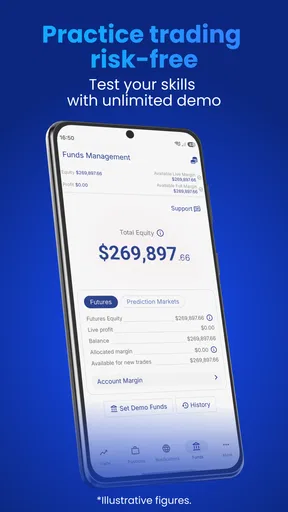
- Demo account lets beginners practice without risking real money.
- Fast order execution and real-time price tracking are easy to access.
- Stop-loss and take-profit tools help manage potential losses.
- The app supports price alerts for monitoring selected markets.
- Available instruments include shares, forex, commodities, indices, and crypto CFDs.
Limitations of Plus500 Trading & Investing
- CFD trading involves significant risk, especially when using leverage.
- You do not own the underlying assets when trading most available products.
- Overnight fees can increase the cost of holding positions for several days.
- The platform may be unsuitable for investors seeking long-term share ownership.
- Market availability, fees, and features can vary by country and account type.
Similar Picks in This Category
View All
Google Wallet
Google LLC4.3

Airtel: Recharge, Bank & Loans
Airtel4.0

PayPal - Pay, Send, Save
PayPal Mobile4.2

DANA Indonesia Digital Wallet
PT Espay Debit Indonesia Koe4.5

Binance: Buy Bitcoin & Crypto
Binance Inc.4.8

Cash App
Block, Inc.4.7
Frequently Asked Questions
What is Plus500 Trading & Investing?
Plus500 Trading & Investing is a mobile trading platform that allows users to monitor markets and trade a range of financial instruments, depending on their country and account type. The app provides live prices, charts, alerts, risk-management tools, and an order interface. It is designed for independent traders, but it is not a substitute for financial advice or investment education.
Can beginners use the Plus500 app safely?
Beginners can use Plus500, but they should understand how trading works before depositing money. The app is generally straightforward to navigate and may offer a demo account for practice, depending on the region. However, leveraged products such as CFDs can produce rapid losses, and many retail accounts lose money when trading them. New users should read the risk warnings carefully and start cautiously.
What can I trade through Plus500 Trading & Investing?
The available markets depend on the Plus500 service offered in your location and may include shares, indices, commodities, currencies, cryptocurrencies, ETFs, and other instruments. Some products may be offered as CFDs, while other services may provide investing features. Before opening a position, check the instrument details, spreads, overnight fees, leverage, trading hours, and whether you actually own the underlying asset.
Does Plus500 charge fees or commissions?
Plus500 may advertise commission-free trading on certain products, but that does not mean trading is completely free. Costs can include the spread, overnight funding, currency-conversion charges, inactivity fees, guaranteed-stop fees, or other service-related charges, depending on the account and region. I recommend reviewing the current fee schedule inside the app and checking the order preview before confirming every trade.
Is Plus500 regulated and suitable for long-term investing?
Plus500 operates through regulated entities in various jurisdictions, but the protections and rules differ according to the company serving your country. Users should verify the relevant license and investor-protection information before registering. The platform can support market exposure, yet leveraged CFD trading is generally more appropriate for short-term speculation than traditional long-term investing. Consider your objectives, risk tolerance, and local tax obligations first.
